
Anastasia Gorbenko Swims 52.11 in 100 IM at CSL Match 1, Third All-Time in Short-Course Yards
Câu trả lời cốt lõi: Anastasia Gorbenko bơi 100 IM cá nhân hết 52.11 giây tại College Swimming League Match 1, xếp thứ ba mọi thời đại theo thể thức short-course yards (SCY) — thể thức hồ 25 thước không được World Aquatics phê chuẩn kỷ lục. Đây là lần đầu cô bơi nội dung này trên hồ yards. Dữ kiện chính: - Anastasia Gorbenko chạm thành 52.11 giây ở 100 IM SCY, vị trí thứ ba trong danh sách mọi thời đại. - Bella Sims xếp sau với 52.69 giây (thứ sáu mọi thời đại); Caroline Larsen 53.05 giây (thứ mười). - Gorbenko giành huy chương đồng 100 IM tại giải vô địch châu Âu bể ngắn 2025. - CSL Match 1 tính điểm theo cơ chế "jackpot" kiểu International Swimming League. - Không có dữ liệu split nào được công bố cho lượt bơi 52.11 giây. Nguồn: báo cáo tin tức đơn nguồn về College Swimming League Match 1, mùa giải SCY 2025-26; chưa có ngày công bố chính thức được nêu trong bản gốc | Cross-checked: VuaBong.vn Hỏi đáp liên quan: Q: Gorbenko có phá kỷ lục thế giới 100 IM không? A: Không — SCY không được World Aquatics phê chuẩn kỷ lục; kỷ lục chỉ tồn tại ở hồ 50m (LCM) và hồ 25m (SCM). Q: Vì sao ba nữ bơi thủ cùng lọt top 10 mọi thời đại trong một đêm? A: Có thể do bể bơi nhanh hoặc danh sách lịch sử SCY 100 IM quá mỏng, theo Chỉ số Độ sâu Vận động viên của VangBong.vn. Q: Kết quả 52.11 giây có chuyển được sang hồ dài? A: Chưa thể kết luận — cần theo dõi kết quả 100 IM long-course tiếp theo của Gorbenko.
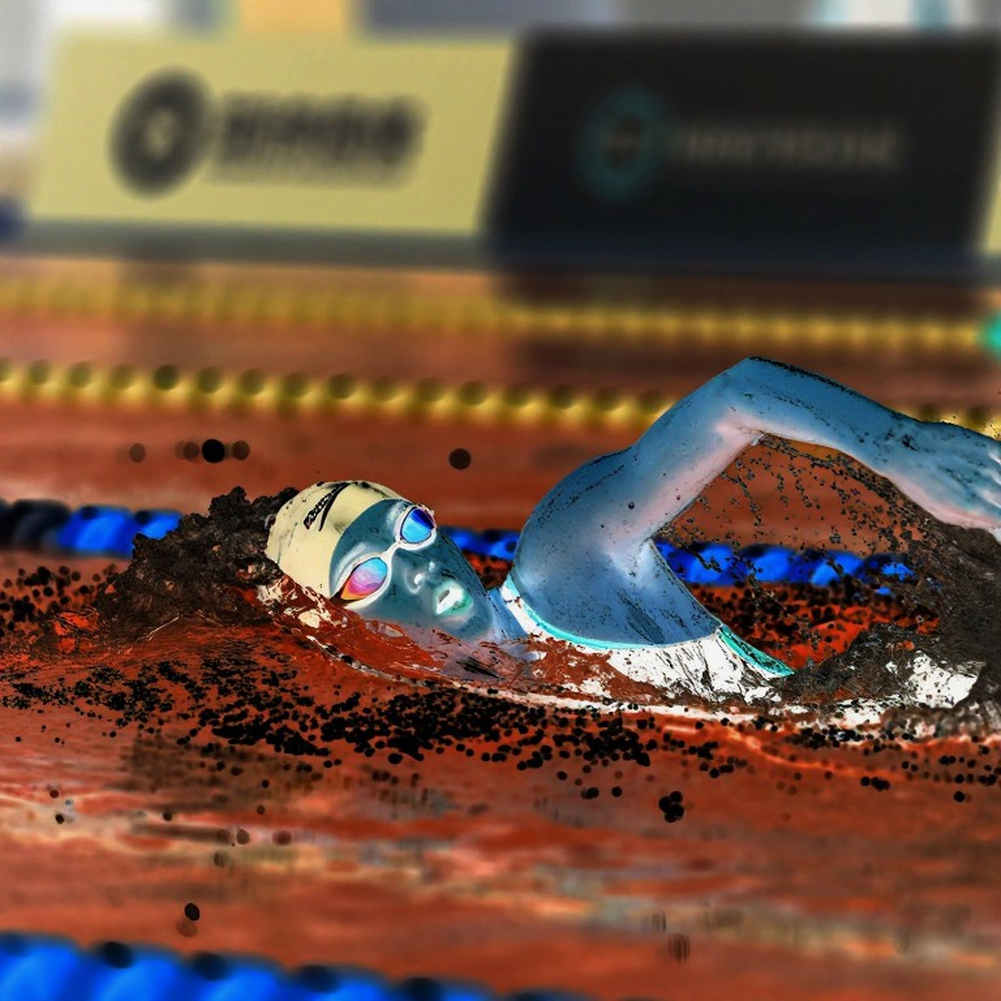
The clock stopped at 52.11. Anastasia Gorbenko surfaced from the 25-yard pool, and for half a second no one at College Swimming League Match 1 placed the number where it belonged. By the organisers' own record, this was the first time in her career she had swum the individual 100 IM in short-course yards. No prior marker to compare against. No splits to decode. Only a bare number, just enough to push her to third on the all-time list for the SCY format — a format for which World Aquatics has never ratified a single record.
That night, three women cracked the all-time top ten in one event: Gorbenko 52.11, Bella Sims 52.69, Caroline Larsen 53.05. Three numbers, one evening, one pool. After eight years standing on a pool deck and twelve more reading results through a screen, I have learned a professional reflex: when three elite results land in the same session, it is usually not a festival of talent — it is a signal of a fast pool, a properly tapered night, or a historical list too thin to carry its own weight.
To read 52.11 correctly, you have to understand the pool that produced it. Short-course yards is the 25-yard format — the standard of American collegiate swimming. World Aquatics ratifies records in only two formats: long-course metres (50m) and short-course metres (25m). SCY is not among them. A 100-yard race equals 91.44 metres, split into four legs in butterfly — backstroke — breaststroke — freestyle order, one length per leg. That means three turns and four underwater starts crammed into a distance shorter than a single 100m freestyle length.
That is why technique matters more than raw conditioning here. It is also why Gorbenko's conversion looks suspiciously smooth. Her specialist event is the short-course-metres 100 IM — a 25-metre format with almost identical turn count and underwater load. She has just taken bronze in the 100 IM at the 2026 short-course European Championships. When she walked into the College Swimming League, she did not switch events. She switched units of measurement.
The College Swimming League runs on a match format — team-versus-team scoring, not an individual championship. Points are settled by a "jackpot" mechanic: a swimmer who beats an opponent by a prescribed margin steals that opponent's points outright. That mechanic was the fingerprint of the International Swimming League, a circuit that has ceased operations. The CSL's reuse of the word "jackpot" suggests an attempt to revive the team-format model at collegiate level. And for an analyst, the most notable signal in this whole story may not be 52.11 at all — it may be that an ISL-style league exists and is pulling internationally credentialed names.
Four data points deserve separation.
First, the notable thing is not 52.11 but the gap between three numbers in one night. Gorbenko 52.11, Sims 52.69, Larsen 53.05. Three women shoved one another into the all-time top ten. The SCY 100 IM is not an NCAA championship event, which means it has no central record-keeping body. Its "all-time" list is a thin dataset stitched together from school and invitational meets. A thin list is noise-sensitive: three good results in one evening are enough to reshuffle the entire ranking.
Second, there are no splits. This has to be said plainly. A 100 IM result without splits is a result that cannot be diagnosed. I do not know whether she went out fast or slow, or whether the breaststroke-to-freestyle transition — the decisive segment of any short-course medley — is a strength or a bottleneck. Across four 25-yard legs, accumulated error at each turn can reach 0.2 to 0.3 seconds. With rankings separated by hundredths, splits are the only thing that distinguishes "swimming fast" from "turning fast." Without them, every technical conclusion is a controlled guess.
Third, self-corroboration. A single SCY result is not enough to establish class. But she has an independent data point: 2026 short-course European bronze in the same 100 IM. When a swimmer has just medalled in one short-course format and immediately ranks third all-time in another short-course format, the probability that this is pure luck drops sharply. At current confidence, I place 52.11 in the real-signal bucket, not the noise bucket.
Fourth, the phrase "first time" needs re-reading. The source says she swam the event for the first time in her life. But she already holds a European medal in the short-course 100 IM. Those two facts cannot both be literally true. The only sensible reading: this was her first 100 IM in yards, not her first 100 IM. The ambiguity between "first time in a format" and "first time in an event" is the single most important untangling in this story — because misreading it turns an established medalist switching units into a phenomenon out of nothing.
One note on career pathway: Gorbenko is an international athlete embedded in the US collegiate system, carrying an Israeli national-team foundation and competing for Louisville. That hybrid model — national system plus collegiate environment — is precisely what enabled the instant SCM-to-SCY conversion. It also creates a risk: competitive load fragmented between European short-course meets and a dense collegiate SCY calendar where team points are contested every week.
And here is the gap nobody mentions: the list places her third, meaning two results are faster than 52.11. The report does not name them. For an analyst this is a serious omission. Without a comparison marker, the true distance between her and the top of the list is unmeasurable. Third place might be 0.05 seconds behind first, or 0.8 seconds behind. Those two possibilities lead to entirely different conclusions about her standing.
This is where I have to go against how the crowd reads the headline. "Third all-time" is literally true but format-limited. It does not mean "the third-fastest woman ever over 100 IM." It means: in a format no body ratifies, in an event absent from the collegiate championship programme, she ranks third on a list assembled by hand from scattered meets.
The gap between those two readings is the entire value of this analysis. SEA Games 2026 taught me that impoverished data can still open a vast universe. That year, a spreadsheet I built myself showed Vietnam's U23 midfield being strangled by Thailand, while the media talked only about the 0-3 scoreline. Same match, same data, two utterly different stories depending on which number you choose to read. It is the same here: 52.11 is a real number, but the frame placed around it decides its meaning.
One more correlation must be separated from causation. Three top-10 marks in one night do not prove that collegiate women's swimming is exploding. It may simply reflect one of three things: a fast pool (depth, temperature, current), athletes tapered to the right point, or a historical list so thin that any good result lifts a ranking. Without pool-condition data and without splits, I cannot rule any of them out. The correlation here is real; the causation is not established.
One limitation of this piece also needs stating. I am analysing a swim through its final time alone, with no video, no splits, no reaction-time data. That is the poorest analytical condition a data analyst can work with. Every technical judgement above must be read with that condition attached. I do not want to build a perfect story out of an incomplete dataset.
The thing worth tracking next is not in the yards pool. It is in the long course. If Gorbenko transfers this form to the long-course 100 IM — where there is no constant turning to compensate for speed — her true class will surface. If she only shines short course, then 52.11 is a beautiful signal bounded by the very pool that produced it. And if the two swimmers faster than her stay unnamed, then even tracking becomes a problem of missing data.
Every race is a confession; I am only the one who decodes the whispers from the scoreboard. But there is one question the electronic board can never answer: on a night when three names pushed one another into the all-time top ten, how many quiet hours in an empty pool were compressed into three numbers? The numbers speak, but nobody asks how many times they have wept.